
Essential Tremor, Dystonia, Chorea and Tics, and Gait Disorders
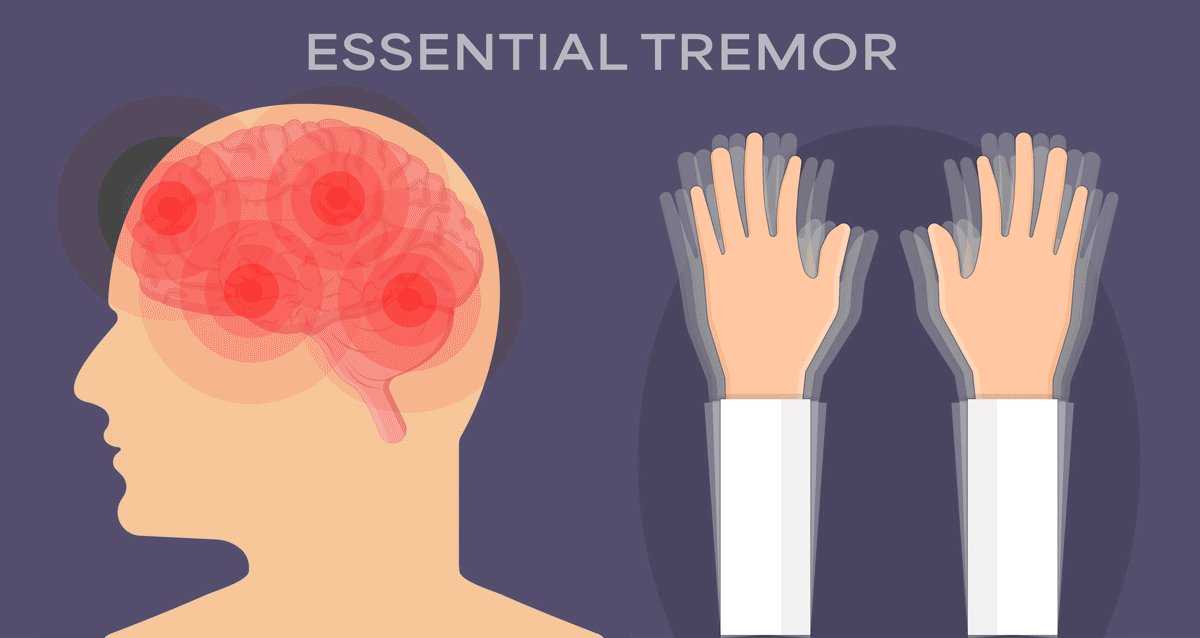 Essential Tremor, Dystonia, Chorea and Tics, and Gait Disorders
Movement disorders represent a broad spectrum of neurological conditions that affect voluntary and involuntary movement, posture, coordination, and gait. Although these disorders differ in cause and presentation, they share a central theme: abnormalities in the brain’s motor control networks, including the cerebellum, basal ganglia, thalamus, cortex, and peripheral neuromuscular pathways.
This Condition Center integrates four major categories:
- Essential Tremor (ET) — the most common movement disorder, characterized by action tremor of the hands, head, or voice.
- Dystonia — sustained or intermittent involuntary muscle contractions causing twisting, abnormal postures, or repetitive movements.
- Chorea & Tics — rapid, involuntary movements or vocalizations resulting from basal ganglia dysfunction.
- Gait Disorders — impairments in balance, walking rhythm, stride, or postural control from neurological, muscular, or sensory causes.
These disorders can affect quality of life, fine motor skills, speech, daily activities, independence, and safety. Early recognition and appropriate treatment lead to better outcomes, improved function, and targeted rehabilitation strategies.
Questions to Ask Your Doctor
For Tremor
• Is my tremor essential tremor, Parkinsonian tremor, functional tremor, or medication-induced?
• Do I need imaging or lab testing?
• Are medications, physical therapy, or deep brain stimulation appropriate?
• What lifestyle modifications can reduce tremor frequency?
For Dystonia
• What type of dystonia do I have—focal, segmental, generalized, or task-specific?
• Should I receive botulinum toxin injections?
• Could my dystonia be genetic or medication-related?
• Are there therapies to reduce muscle spasms and improve motor control?
For Chorea & Tics
• What is causing my involuntary movements—genetics, autoimmune disease, medications, or metabolic factors?
• Am I at risk for Huntington disease or other neurodegenerative conditions?
• What treatments help reduce chorea or tic frequency?
• Do I need genetic counseling?
For Gait Disorders
• Is my gait problem due to balance issues, neuropathy, Parkinsonism, or musculoskeletal weakness?
• Do I need physical therapy, assistive devices, or fall-prevention strategies?
• Which imaging or nerve tests could clarify the cause?
• How do we monitor progression?
Overview
Movement disorders arise from dysfunction in the systems that regulate movement:
• Basal ganglia — planning and scaling movement (tremor, chorea, dystonia, tics)
• Cerebellum — coordination, balance, fine motor control (tremor, ataxia)
• Cortex and corticospinal tract — voluntary motor planning
• Peripheral nerves and muscles — gait, balance, strength
• Sensory integration systems — proprioception, vestibular function
Accurate diagnosis requires careful neurological examination, targeted imaging, laboratory evaluation, and sometimes genetic testing. Treatment is highly individualized and includes medications, injections, neuromodulation, physical therapy, and behavioral interventions.
ESSENTIAL TREMOR (ET)
What Is Essential Tremor?
Essential Tremor is the most common movement disorder, affecting hands, head, voice, and sometimes legs or trunk. It is typically an action tremor, meaning it occurs during voluntary movement (writing, eating, lifting objects). ET often runs in families and may worsen gradually over time.
Common Features
• Bilateral hand tremor during action
• Tremor worsens with stress, caffeine, and fatigue
• Tremor improves with alcohol (in many, not all)
• Head (“yes-yes” or “no-no”) tremor
• Voice tremor in some individuals
What Makes ET More Likely?
• Family history (“familial tremor”)
• Midline tremor (head/voice)
• Longstanding tremor without stiffness or slowness
• No major gait abnormalities
 DYSTONIA
What Is Dystonia?
Dystonia is characterized by involuntary muscle contractions that cause repetitive movements or abnormal postures. It can be focal (affecting one area), segmental, or generalized.
Common Types
• Cervical dystonia — neck turning or tilting
• Blepharospasm — involuntary eye closure
• Oromandibular dystonia — jaw, tongue, or facial involvement
• Writer’s cramp or task-specific dystonia
• Generalized dystonia — often genetic or early-onset
Triggers
• Stress
• Fatigue
• Fine motor tasks
• Certain medications (dopamine blockers, anti-nausea drugs)
Associated Conditions
• Wilson disease
• Parkinsonism
• Genetic dystonias
CHOREA & TICS
What Is Chorea?
Chorea refers to involuntary, unpredictable, dance-like movements that flow from one muscle to another. It reflects basal ganglia dysfunction.
Causes of Chorea
• Huntington disease
• Autoimmune chorea (e.g., Sydenham chorea, lupus)
• Metabolic or endocrine disorders (thyroid, Wilson disease)
• Medication-induced (levodopa, antipsychotics)
• Cerebrovascular disease
• Post-infectious or inflammatory syndromes
What Are Tics?
Tics are sudden, rapid movements or vocalizations that may be suppressible for short periods.
Common in:
• Tourette syndrome
• ADHD or OCD comorbidity
• Childhood tic disorders
• Anxiety and stress states
Motor tics include eye blinking, facial grimacing, shoulder shrugging.
Vocal tics include sniffing, throat clearing, humming.
GAIT DISORDERS
What Are Gait Disorders?
Gait disorders affect walking stability, stride, speed, or balance. They arise from:
• Parkinsonian gait
• Cerebellar ataxia
• Neuropathy-related gait instability
• Muscle weakness or myopathy
• Sensory loss
• Stroke-related hemiparetic gait
• Normal pressure hydrocephalus (magnetic gait)
• Vestibular dysfunction
Signs include shuffling, wide-based gait, slow turns, freezing episodes, imbalance, or falls.
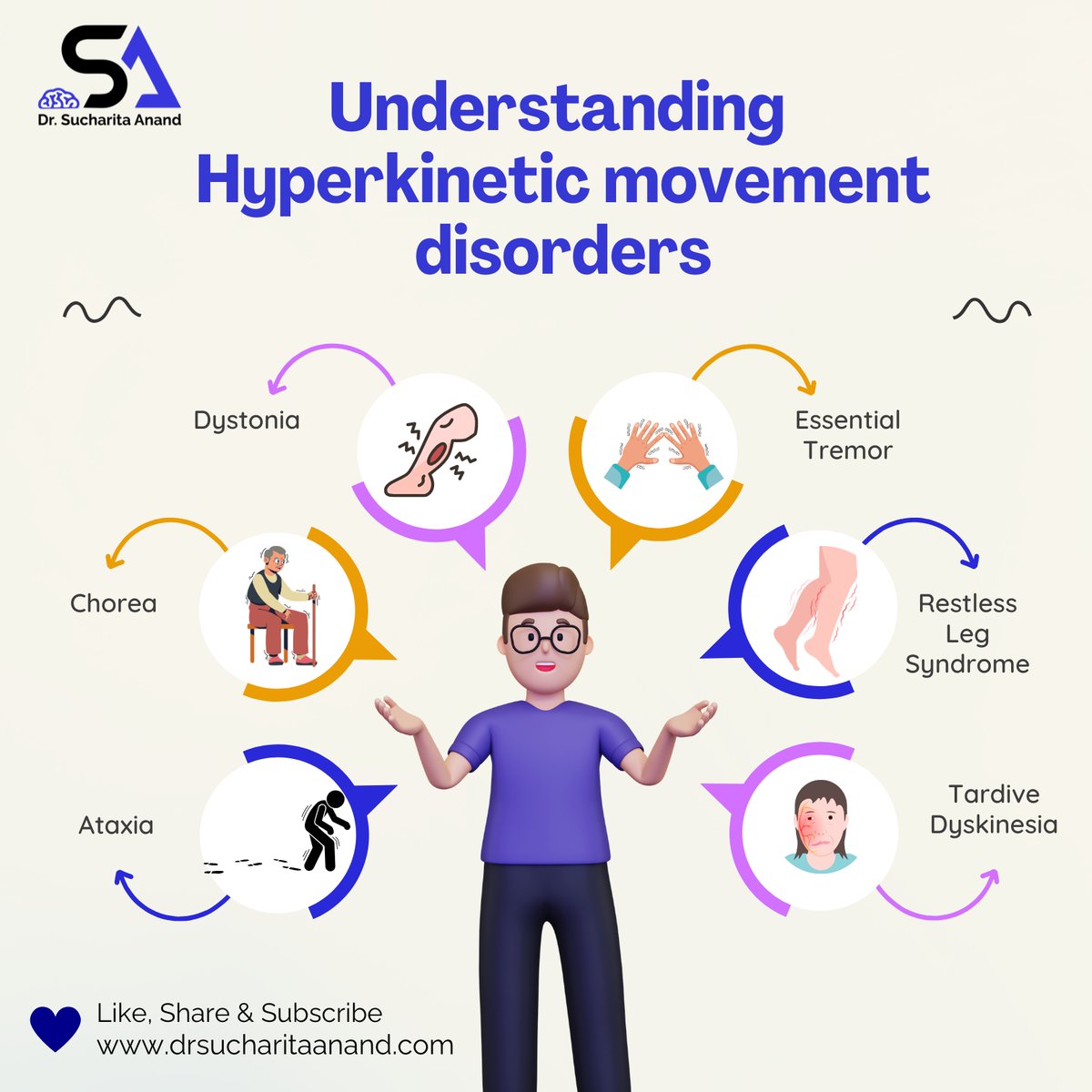 Signs and Symptoms Across Disorders
Essential Tremor
• Action tremor
• Handwriting difficulties
• Tremor interfering with eating or fine motor tasks
Dystonia
• Uncontrolled twisting movements
• Abnormal postures
• Muscle spasms
• Pain or discomfort
Chorea
• Fidgety, flowing, unpredictable movements
• Difficulty maintaining posture
• Facial grimacing
Tics
• Repetitive movements or sounds
• Temporary voluntary suppression
• Worsened by stress
Gait Disorders
• Unsteadiness
• Frequent falls
• Imbalance turning
• Slow or shuffling walk
• Irregular stride
Exams and Tests
1. Neurological Examination
Evaluates motor patterns, tremor type, dystonic posturing, balance, and coordination.
2. MRI Brain
Indicated when:
• Atypical features
• Rapid progression
• Chorea
• Gait disorders suggest cerebellar or structural disease
3. Laboratory Evaluation
• Thyroid function
• Copper/ceruloplasmin (Wilson disease)
• Metabolic panel
• Autoimmune markers
• B12 and vitamin levels
4. Genetic Testing
For suspected:
• Huntington disease
• DYT1 or other dystonia genes
• Spinocerebellar ataxias
5. Dopamine Transporter Scan (DaTscan)
Used to distinguish:
• Essential tremor vs Parkinsonian tremor
6. Gait & Balance Assessment
• Physical therapy evaluation
• Fall-risk testing
• Vestibular assessment
Treatment
Essential Tremor
Medications:
• Propranolol
• Primidone
• Topiramate
• Gabapentin
Procedures:
• Botulinum toxin injections for head or voice tremor
• Deep brain stimulation (DBS) — highly effective for severe ET
• MR-guided focused ultrasound thalamotomy
Dystonia
First-line therapy: Botulinum toxin injections (focal dystonia).
Medications:
• Trihexyphenidyl
• Baclofen
• Benzodiazepines
• VMAT2 inhibitors (for some dystonic-hand movements)
Advanced therapies:
• Deep brain stimulation (GPi-DBS) for generalized or severe dystonia
Chorea
Medications:
• VMAT2 inhibitors (tetrabenazine, deutetrabenazine)
• Atypical antipsychotics (low dose)
• Treat underlying cause (autoimmune, metabolic, infectious)
For Huntington disease:
• Symptomatic management
• Counseling and genetic support
Tics
Behavioral therapy:
• CBIT (Habit Reversal Training) — highly effective
Medications:
• Alpha-agonists (guanfacine, clonidine)
• VMAT2 inhibitors
• Select antipsychotics (low dose)
Gait Disorders
Treatment depends on etiology:
• Physical therapy
• Balance training
• Strengthening
• Assistive devices
• Treat neuropathy or myopathy
• Manage Parkinsonian gait with dopaminergic therapy
• Treat normal pressure hydrocephalus with shunting (when appropriate)
• Address cerebellar gait with stabilization strategies
Living With Movement Disorders
Most individuals benefit significantly from:
• Early diagnosis
• Multidisciplinary care
• Targeted medications
• Physical/occupational therapy
• Lifestyle and environmental modifications
• Assistive devices when indicated
• Stress and sleep optimization
Movement disorders are highly manageable with the correct therapy plan and ongoing monitoring.
Did You Know?
• Essential tremor affects up to 10 million Americans.
• Deep brain stimulation is highly effective for both ET and dystonia.
• Chorea is a symptom, not a diagnosis—identifying the cause is critical.
• Tics often improve with behavioral therapy alone.
• Gait disorders are one of the strongest predictors of fall risk and hospitalization but improve with structured rehabilitation.
References
Essential Tremor (5 references):
- Haubenberger D, Hallett M. Essential Tremor. N Engl J Med. 2018;378(19):1802-1810.[1]
https://www.nejm.org/doi/full/10.1056/NEJMcp1707928
- Comprehensive review: bilateral action tremor ≥3 years, cerebellar dysfunction, first-line treatment propranolol/primidone, interventional options include DBS and MRI-guided focused ultrasound
- Shanker V. Essential Tremor: Diagnosis and Management. BMJ. 2019;366:l4485.[2]
https://pubmed.ncbi.nlm.nih.gov/31383632
- 2018 consensus redefined ET as isolated action tremor ≥3 years; "ET plus" includes additional neurologic symptoms; DBS and focused ultrasound for refractory cases
- Welton T, Cardoso F, Carr JA, et al. Essential Tremor. Nat Rev Dis Primers. 2021;7(1):83.[3]
https://pubmed.ncbi.nlm.nih.gov/34764294
- 60 million affected worldwide; cerebellar Purkinje cell changes, GABAergic dysfunction, genetic and environmental factors
- Ferreira JJ, Mestre TA, Lyons KE, et al. MDS Evidence-Based Review of Treatments for Essential Tremor. Mov Disord. 2019;34(7):950-958.[4]
https://pubmed.ncbi.nlm.nih.gov/31046186
- MDS systematic review: propranolol, primidone, topiramate (>200mg/day) clinically useful; DBS, radiofrequency and MRI-guided focused ultrasound thalamotomy possibly useful
- Hopfner F, Deuschl G. Managing Essential Tremor. Neurotherapeutics. 2020;17(4):1603-1621.[5]
https://pubmed.ncbi.nlm.nih.gov/32915385
- Treatment algorithm: first-line propranolol/primidone/topiramate; botulinum toxin for selected cases; DBS and focused ultrasound for severe tremor
Dystonia (5 references):
- Albanese A, Bhatia KP, Fung VSC, et al. Definition and Classification of Dystonia. Mov Disord. 2025;doi:10.1002/mds.30220.[6]
https://pubmed.ncbi.nlm.nih.gov/40326714
- 2025 updated consensus: sustained/intermittent abnormal movements or postures; two-axis classification (clinical characteristics and etiology)
- Albanese A, Di Giovanni M, Lalli S. Dystonia: Diagnosis and Management. Eur J Neurol. 2019;26(1):5-17.[7]
https://pubmed.ncbi.nlm.nih.gov/30035844
- Five physical signs: dystonic postures, movements, gestes antagonistes, mirror dystonia, overflow; botulinum toxin first-line for focal; DBS for generalized
- Balint B, Mencacci NE, Valente EM, et al. Dystonia. Nat Rev Dis Primers. 2018;4(1):25.[8]
https://pubmed.ncbi.nlm.nih.gov/30237473
- Pathophysiology: transcriptional regulation abnormalities, striatal dopaminergic dysfunction, synaptic plasticity; TOR1A, THAP1, GCH1, KMT2B mutations
- Rodrigues FB, Duarte GS, Prescott D, et al. Deep Brain Stimulation for Dystonia. Cochrane Database Syst Rev. 2019;1:CD012405.[9]
https://pubmed.ncbi.nlm.nih.gov/30629283
- Meta-analysis: GPi-DBS may reduce symptom severity and improve function in cervical, segmental, generalized dystonia (low-quality evidence)
- Stephen CD, Dy-Hollins M, Gusmao CM, et al. Dystonias: Clinical Recognition and the Role of Additional Diagnostic Testing. Semin Neurol. 2023;43(1):17-34.[10]
https://pubmed.ncbi.nlm.nih.gov/36972613
- Diagnostic approach based on age of onset, progression, isolated vs combined features; imaging and genetic testing indications; multidisciplinary treatment
Chorea, Huntington Disease & Tics (5 references):
- Furr Stimming E, Claassen DO, Kayson E, et al. Safety and Efficacy of Valbenazine for Chorea in Huntington's Disease (KINECT-HD): Phase 3 RCT. Lancet Neurol. 2023;22(6):494-504.[11]
https://pubmed.ncbi.nlm.nih.gov/37210099
- Phase 3 RCT: valbenazine (VMAT2 inhibitor) reduced chorea; ~90% of adult-onset HD exhibit chorea; dopaminergic modulation is primary symptomatic treatment
12. Rosenthal LS, Farag M, Aziz NA, Bang J. Vesicular Monoamine Transport Inhibitors: Current Uses and Future Directions. Lancet. 2025;406(10503):650-664.[12]
https://pubmed.ncbi.nlm.nih.gov/40783291
- Comprehensive review of VMAT2 inhibitors (tetrabenazine, deutetrabenazine, valbenazine) for HD chorea, tardive dyskinesia, Tourette syndrome, dystonia
13. Pringsheim T, Okun MS, Müller-Vahl K, et al. Practice Guideline: Treatment of Tics in Tourette Syndrome and Chronic Tic Disorders. Neurology. 2019;92(19):896-906.[13]
https://www.ncbi.nlm.nih.gov/pmc/articles/PMC6537133/
- AAN guideline: Comprehensive Behavioral Intervention for Tics (CBIT) has high-confidence efficacy; individualized treatment considering comorbidities; DBS for severe refractory cases
14. Johnson KA, Worbe Y, Foote KD, et al. Tourette Syndrome: Clinical Features, Pathophysiology, and Treatment. Lancet Neurol. 2023;22(2):147-158.[14]
https://pubmed.ncbi.nlm.nih.gov/36354027
- CBIT reduces tics 26-31%; hyperactivity in cortico-striato-thalamo-cortical loops; alpha-agonists, VMAT2 inhibitors, low-dose antipsychotics
15. Cardoso F, Seppi K, Mair KJ, et al. Seminar on Choreas. Lancet Neurol. 2006;5(7):589-602.[15]
https://pubmed.ncbi.nlm.nih.gov/16781989
- Classification of choreas: genetic (HD, benign hereditary), acquired (Sydenham, lupus, stroke, metabolic); HD: chorea, psychiatric, cognitive decline; 15-20 year survival
Gait Disorders & Rehabilitation (5 references):
- Snijders AH, van de Warrenburg BP, Giladi N, Bloem BR. Neurological Gait Disorders in Elderly: Clinical Approach and Classification. Lancet Neurol. 2007;6(1):63-74.[16]
https://pubmed.ncbi.nlm.nih.gov/17166803
- Three-step clinical approach: gait pattern recognition (ataxic, parkinsonian, spastic, frontal), additional tests, associated findings; practical classification system
17. Baker JM. Gait Disorders. Am J Med. 2018;131(6):602-607.[17]
https://pubmed.ncbi.nlm.nih.gov/29288631
- Gait requires integration of entire nervous system; categories: spasticity/weakness, cerebellar/sensory ataxia, parkinsonism, frontal, functional; examination approach
18. Bloem BR, Okun MS, Klein C. Parkinson's Disease. Lancet. 2021;397(10291):2284-2303.[18]
https://pubmed.ncbi.nlm.nih.gov/33848468
- Comprehensive PD review including gait: compensatory strategies, aerobic exercise benefits, virtual reality, gamification improves compliance; exercise-dependent plasticity
19. Foltynie T, Bruno V, Fox S, et al. Medical, Surgical, and Physical Treatments for Parkinson's Disease. Lancet. 2024;403(10423):305-324.[19]
https://pubmed.ncbi.nlm.nih.gov/38245250
- Physiotherapy, occupational therapy, speech therapy effective; early referral recommended; aerobic exercise reduces motor severity; intensive exercise reduces hospital admissions; falls prevention
20. Osborne JA, Botkin R, Colon-Semenza C, et al. Physical Therapist Management of Parkinson Disease: APTA Clinical Practice Guideline. Phys Ther. 2022;102(4):pzab302.[20]
https://pubmed.ncbi.nlm.nih.gov/34963139
Source: https://www.premierneurohealth.com/
Keep learning about Essential Tremor, Dystonia, Chorea and Tics, and Gait Disorders
A short summary of what's new, roughly once a week.
No account needed. One click to stop. We don't sell your address — and everything on this page stays open whether you sign up or not.