
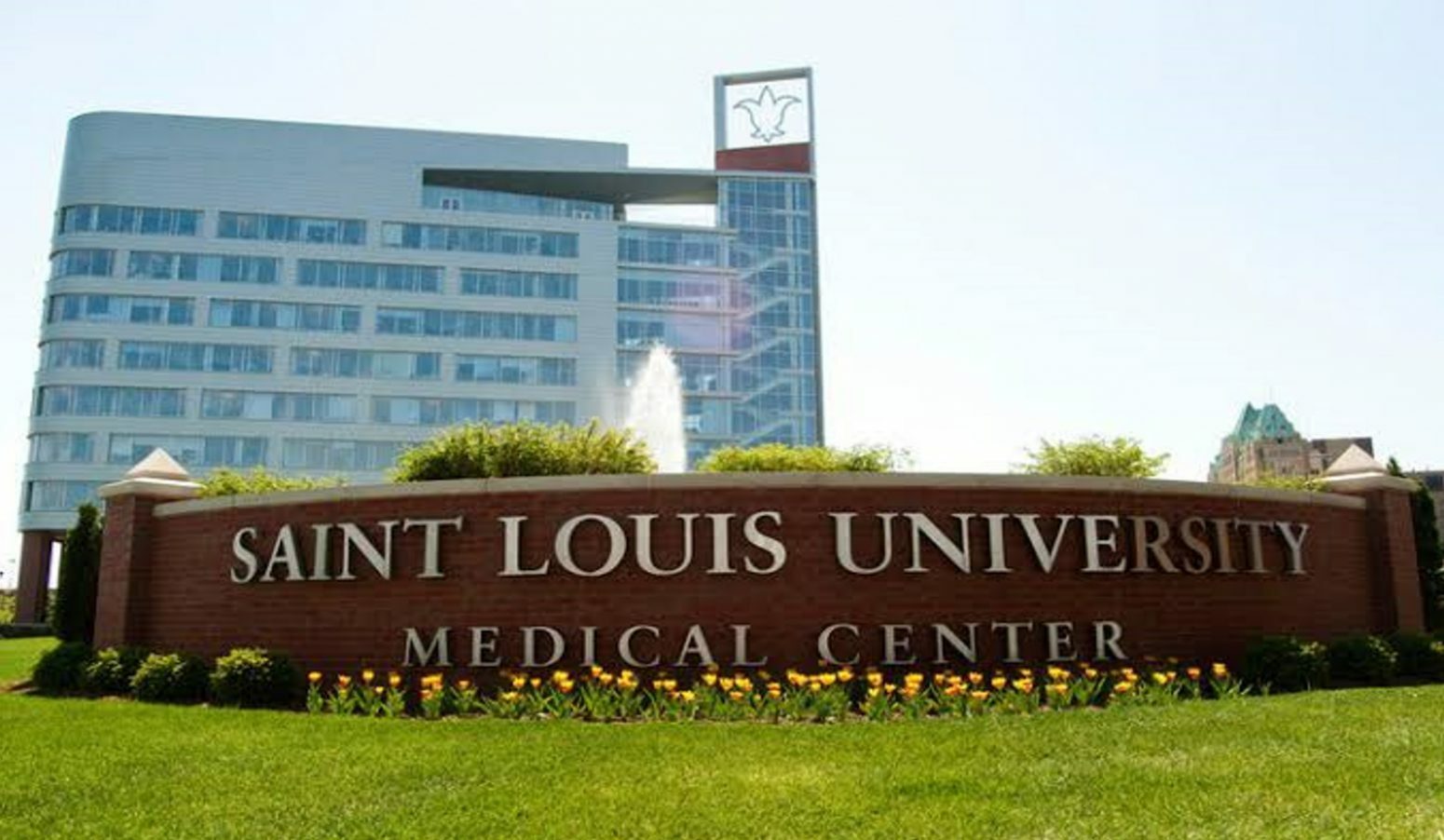
Saint Louis University School of Medicine
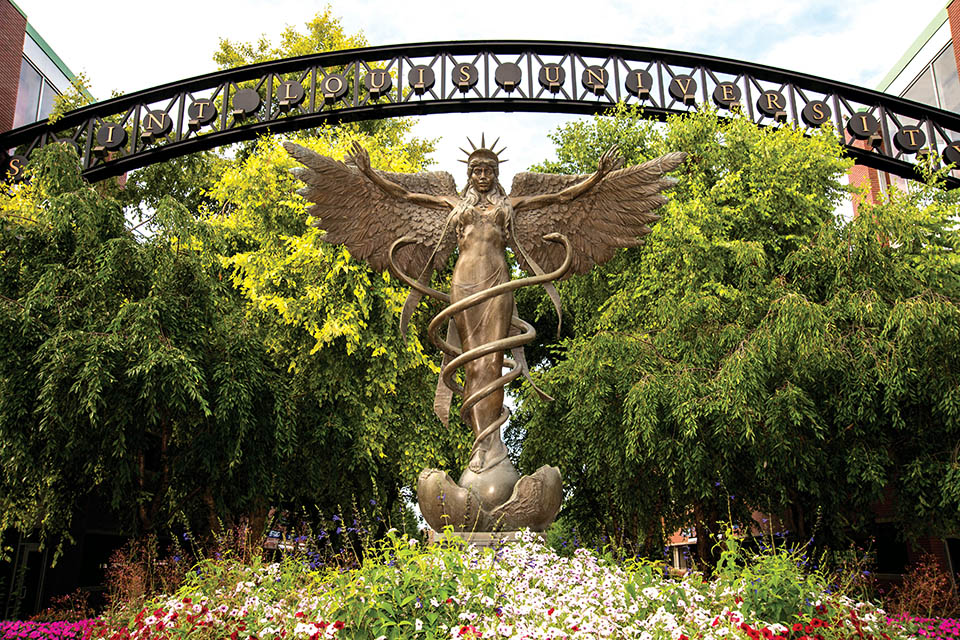
Today, about 550 faculty members, 700 medical students and 550 residents in 48 graduate medical education programs, including residencies, subspecialty residencies and fellowships, call SLU home.
The school is a leading center of research in five key areas: cancer, infectious disease, liver disease, aging and brain disorders, and heart/lung disease.
As one of only nine NIH-funded vaccine research institutions, SLU's Center for Vaccine Development conducted pivotal research on the H1N1 influenza vaccine. Led by Daniel Hoft, M.D., Ph.D., SLU’s Center for Vaccine Development also has conducted extensive research on biodefense, flavivirus, influenza, respiratory syncytial virus (RSV) and tuberculosis vaccines.
The Saint Louis University Liver Center provides national leadership in the field of hepatology, and is staffed by some of the highest-profile doctors and research scientists in the nation, including co-directors Bruce Bacon, M.D., and Adrian Di Bisceglie, M.D. SLU liver specialists see more than 600 patients per month with various types of liver diseases, and have one of the world's largest hepatitis C practices in the world, treating more than 800 patients annually. Its work with fatty liver disease is internationally recognized.
Saint Louis University researchers also are leading the way in aging and brain disorders research. Funded by a $2.5 million federal grant, SLU is sharing its best practices in elder care by teaching primary care providers from across the state how to care for the burgeoning number of aging adults.
Numerous Alzheimer's disease and multiple sclerosis trials are currently underway at SLU. The University led a groundbreaking study that was funded by a $5.3 million U.S. Department of Defense grant that used cutting-edge imaging equipment to map the brain injuries of combat veterans and civilians.
Mission and Values
The mission of the Saint Louis University School of Medicine is the pursuit of excellence in education, research, clinical care, and community engagement through professional development, collaboration and social justice.Our educational approach embraces integrated activities in basic and clinical research; the provision of patient-centered, compassionate, culturally competent health care; and engagement with the community through public service. Grounded in an understanding of the scientific method and an appreciation for personal commitment and service to others, these diverse educational experiences prepare individuals for careers and leadership roles in medicine and the medical sciences.
In April 2018, the governing body for the School of Medicine approved its strategic plan after a year of collaboration and dialogue between many faculty members and the hard work of four dedicated planning groups. The plan is a five-year road map that guides the School of Medicine to advance quality and growth in research, education, clinical care and administrative operations. It aligns with our values, vision and mission of living in service to others.
Read the Strategic Plan
In pursuit of its mission, the Saint Louis University School of Medicine seeks to impart to its students the following values:
- A concern for the sanctity of human life.
- A commitment to dignity and respect in the provision of medical care to all patients.
- A devotion to social justice, particularly as regards inequities in availability of and access to health care.
- Humility in awareness of medicine’s inherent limitations in the cure of illness.
- An appreciation for all of the factors that affect a person’s state of health or illness.
- A mature and well-balanced professional behavior that derives from comfortable relationships with members of the human family and one’s Creator.
Medical Education at SLU
- ToggleUndergraduate Medical Education (M.D.)
- Preceptors
- ToggleGraduate Medical Education
- ToggleDoctorate of Medicine and Philosophy (M.D./Ph.D.)
- ToggleGraduate Programs
- ToggleContinuing Medical Education
At Saint Louis University, we are committed to teaching both the science and the art of medicine.

The School of Medicine offers students a comprehensive education that incorporates disease prevention and treatment with compassionate care delivered in a team setting. Importantly, our students and trainees are also involved in scientific studies so they are trained in the latest disease management techniques.
Undergraduate Medical Education
Our four-year M.D. program integrates the basic and clinical sciences through an organ system approach to medical education. Didactic settings are varied and include small group activities, computer-based instruction and case-based tutorials.
Our Clinical Skills Center offers students the opportunity to interact with trained standardized patients and practice selected clinical procedures on simulated models and mannequins before participating in the care of actual patients.
During third- and fourth-year clinical rotations, students continue developing their diagnostic and treatment competencies in a variety of supervised inpatient and outpatient settings.
Graduate Medical Education
Saint Louis University trains 500 residents, subspecialty residents and fellows in 50 programs throughout our affiliated network of teaching hospitals and other partners.
Our residency programs and subspecialty residencies are accredited by the Accreditation Council for Graduate Medical Education (ACGME) and are board and subspecialty board certified.
We also offer fellowship programs, which are defined as recognized postgraduate research or clinical programs that have not yet had accreditation standards and specific subspecialty board requirements developed. These programs are approved by the School of Medicine’s Graduate Medical School Education Committee.
Dual Degree, M.S. and Ph.D. Options
Dual Degree Programs
Students pursuing an M.D. at Saint Louis University may also choose to customize their education by enrolling in a dual degree program in business, public health or physician-scientist training.
- M.D./Ph.D. (Medical Scientist Training Program)
- M.D./Ph.D. (Health Outcomes Research, Ph.D)
- M.D./Master of Public Health
- M.D./Master of Business Administration
M.S. and Ph.D. in Anatomy
Offered through Saint Louis University's Center for Anatomical Science and Education, SLU’s graduate programs in anatomy can assist in M.D. or Ph.D. postdoctoral training and to stimulate an interest in research.
Learn More About SLU's M.S. and Ph.D. Anatomy Programs
Biomedical Science Ph.D. Programs
The Saint Louis University School of Medicine also offers several graduate programs in biomedical sciences. Students apply to a core program. Upon acceptance, they begin a year of multidisciplinary coursework and four formal laboratory rotations that lead to the selection of a graduate advisor and entry into one of the four distinct Ph.D. programs.
- Biochemistry and Molecular Biology Program
- Molecular Microbiology and Immunology Program
- Pathology Program
- Pharmacological and Physiological Sciences Program
Learn More About SLU's Biomedical Sciences Program
Continuing Medical Education (CME)Source: https://www.slu.edu/medicine