
Temple University Lewis Katz School of Medicine

Founded in 1901 as Pennsylvania’s first co-educational medical school, the Lewis Katz School of Medicine has attained a national reputation for training humanistic clinicians and biomedical scientists. The school attracts students and faculty committed to making a difference in patient care, research, education and public service — at home and across the globe.
The School of Medicine and Temple University Hospital (TUH), its chief clinical training site, provide care for patients from throughout the region seeking advanced tertiary- and quaternary-level care. In addition, TUH serves one of the most vulnerable populations in the nation, providing more free and under-reimbursed care than any other hospital in Pennsylvania.
With clinical training sites that include other member hospitals and specialty centers of the Temple University Health System and educational affiliates of the School of Medicine, medical students gain experience in a variety of urban, suburban, and rural in- and out-patient settings. They learn to provide culturally competent, interprofessional care to a diverse population of patients with simple conditions as well as highly complex ones.
The Lewis Katz School of Medicine is a school that prizes not just technical excellence but diversity, equality and inclusion. It teaches the true art and science of “doctoring.“ Moreover, its educational strategic plan, “Improving Health Through Innovation in Medical Education,” keeps pace with new medical knowledge and with emerging trends in care delivery.
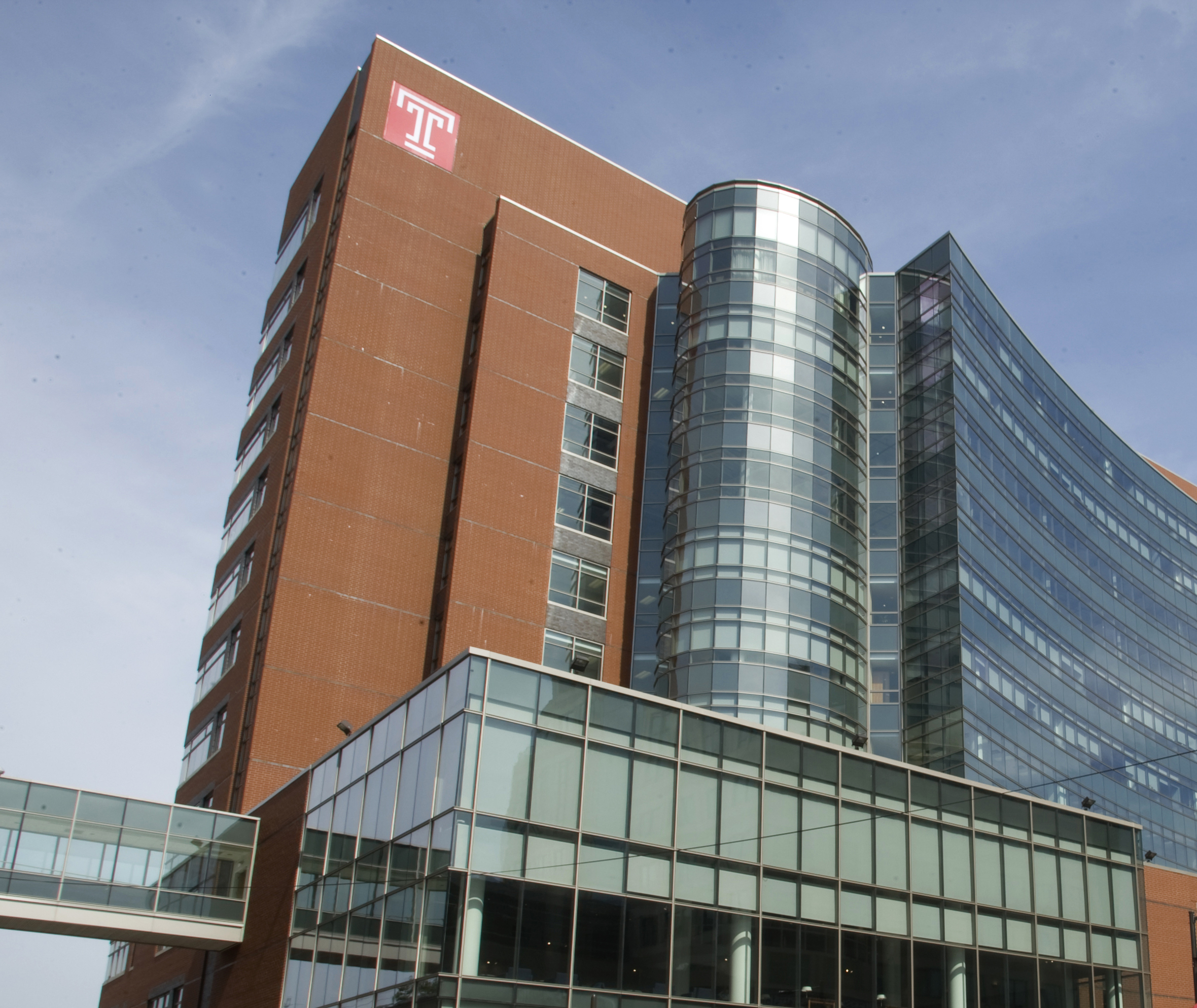
The school’s home base in Philadelphia is a spectacular 11-story, 480,000 square-foot medical education and research building that features state-of-the-art facilities and technologies for medical education and research. With specialized research centers focused on population health, metabolic disease, cancer, heart disease and other strategic priorities, the school conducts investigations to break new ground – and trains future generations of researchers to follow suit.
On October 13, 2015, Temple's medical school was officially dedicated as the Lewis Katz School of Medicine – a historic milestone in the school’s history. Thousands of people participated in events celebrating this change which, Dean Dr. Larry Kaiser said, "joins our school’s legacy to the values that Lewis lived by, and the values which we have always tried to instill in our students – hard work, dedication, service."
The Lewis Katz School of Medicine is part of Temple University Health System, a $1.6 billion enterprise.
Mission
 Lewis Katz School of Medicine at Temple University is dedicated to excellence in education, research and patient care, achieved by faculty, staff and learners who represent and serve our diverse society.
- Education that is patient-centered, instilling in learners the School’s ethic of human service and lifelong learning
- Research that advances and integrates basic and clinical science
- Patient care that is administered with compassion and understanding, utilizing contemporary knowledge and techniques
History
Temple University was founded in 1884 by the Rev. Russell H. Conwell, clergyman, educator, and author of the famed oration, "Acres of Diamonds." It was Pastor Conwell's purpose to make quality education available to all intellectually capable people, regardless of ability to pay. This has remained one of Temple's major goals over the years.Lewis Katz School of Medicine at Temple University opened its doors to students on September 16, 1901. The first coeducational medical college in Pennsylvania, it began as a night and weekend teaching venture to accommodate working-class citizens who sought to improve their lives — and the lives of others — through medical education. Classes were held initially in College Hall, next to Conwell's Baptist Temple Church, and clinical instruction was given at the Samaritan Hospital farther north on Broad Street. The original medical school faculty numbered 20 with 35 students enrolled during the first year. Tuition for those first students was $635 for the five-year program. In 1904, two men who had entered with advanced standing, Frederick C. Lehman and Frank E. Watkins, became its first graduates. Two years later two women — Sara Allen and Mary E. Shepard — completed the full course and were among 14 who received MD degrees. Two years later, the School graduated its first African American woman, Agnes Berry Montier, who practiced general medicine in Philadelphia until her death in 1961.
In 1907, to meet medical licensure requirements, the “night school” was discontinued and a solely day program instituted. During that year, the medical school joined the Dental and Pharmacy schools in buildings located at 18th and Buttonwood Streets. The Flexner Report of 1910, a critical survey of American medical schools, described Temple as “embryonic.” But despite its tiny beginnings, the school has grown and remained productive through a century. In 1929, Samaritan Hospital was renamed Temple University Hospital and ground was broken for a new medical school building across Broad Street that opened in the following year. Dr. William N. Parkinson, a 1911 graduate, became Dean and served admirably in that position for thirty years. With the opening of the 1930 building, each medical class was increased to 100 students.
Temple Medical School formed its first formal affiliation in 1928 with the Jewish Hospital of Philadelphia, now Albert Einstein Medical Center. This and subsequent hospital and scientific ties opened doors for more variety of instruction and investigation. Innovative faculty members brought luster by their teaching and practice, with national and international recognition. Research activities increased in the expanding medical orbit.
An Act of the Pennsylvania Legislature in 1965 designated Temple University a state-related institution in the Commonwealth System of Higher Education.
In October 2015, the school of medicine was officially named the Lewis Katz School of Medicine at Temple University in honor of Temple alumnus, former trustee, visionary leader and ardent supporter Lewis Katz, CST '63.
Source: https://medicine.temple.edu/