
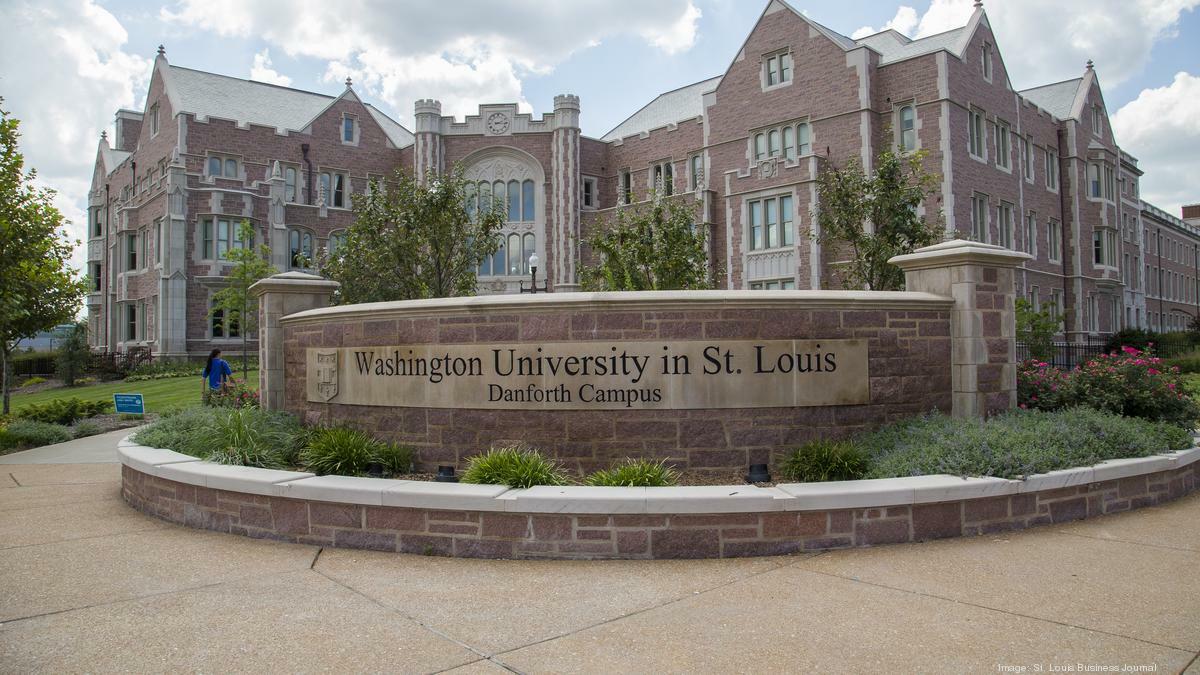
Washington University Medical School in St. Louis
History of the School of Medicine
In 1891, responding to a national concern for improving doctors’ training, Washington University acquired the independent St. Louis Medical College and established a medical department. Missouri Medical College, also independent, joined the department in 1899, uniting the two oldest medical schools west of the Mississippi River.

Missouri Medical College and Washington University Hospital, Jefferson and Lucas Avenue Buildings. Photo: Bernard Becker Medical Library
A decade later, the young medical department was sharply criticized in a report on the state of medical education in the United States and Canada – an assessment that found most medical institutions wholly inadequate. These findings provoked university board member Robert S. Brookings to transform the department into a modern medical school.
Working with the report’s author, Abraham Flexner, Brookings set about installing the medical school with a full-time faculty, adequate endowment, modern laboratories and associated teaching hospitals. Among the first four department heads he recruited in 1910 was Joseph Erlanger, who went on to win the 1944 Nobel Prize in Physiology or Medicine.
In 1919, Evarts Graham was appointed the first full-time head of surgery. Fourteen years later, he performed the first successful lung removal. In 1910, George Dock established a tradition of distinguished clinical research in the Department of Medicine.
The Nursing School
The Washington University School of Nursing, originally called the Training School for Nurses, was organized under the supervision of the School of Medicine in 1905. In 1954, it became an autonomous school of the university. More than 2,000 nurses graduated from the school before its closing in 1969.
Read more about the nursing school’s history »
Carl and Gerty Cori arrived at the School of Medicine in 1931 to join the Department of Pharmacology. In 1947, they won the Nobel Prize in Physiology or Medicine for research on the catalytic conversion of glycogen. Six other Nobelists received training under their auspices. In 2016, Thomas Cori, son of Carl and Gerty, donated his parents’ Nobel prize medals to the university (see video below).
See all Nobel laureates affiliated with the School of Medicine »
Women first gained admission to the student body in 1918; today, women make up half of each incoming class in medical education. In 1962, James L. Sweatt III, MD, became the first African American graduate of the School of Medicine. It took another 10 years, however, for another black student, Julian Mosley, MD ’72, to matriculate. Today the school is proactively devoting resources to improving diversity, equity and inclusion on campus and in the medical field.
The school moved to its current location in the Central West End neighborhood in 1914. When the neighorhood began to falter in the second half of the 20th century, many institutions began to leave. Washington University School of Medicine, Barnes-Jewish Hospital and St. Louis Children’s Hospital formed a coalition in 1962 that went on to lead a successful neighborhood revitalization effort that continues today, through the Washington University Medical Center Redevelopment Corporation.
Tradition of excellence
Over the course of its first 150 years, Washington University has made remarkable progress, growing from a college educating local men and women to an internationally known research university with students and faculty from approximately 110 countries.
Read the history of Washington University in St. Louis »
The transmission of excellence from one generation to the next is a hallmark of Washington University School of Medicine. Dean Robert Moore’s 1951 comment remains true today: “An institution is only as great as the individual men and women who compose it.”
Read more about the history of the School of Medicine in these digital exhibits from Bernard Becker Medical Library:
- Oral History Project (2006)
- Origins and History (2005)
- Pioneering Women in Medicine (2002)
Our faculty, students, trainees and staff are pushing the bounds of medicine and improving health in our community and around the world.
Washington University School of Medicine is committed to advancing human health in a culture that supports diversity, inclusion, critical thinking and creativity. As international leaders in patient care, research and education, our outstanding faculty has contributed major discoveries and innovations in the fields of science and clinical medicine since the school’s founding in 1891.
Located on the Washington University Medical Campus adjacent to the Cortex Innovation Community, we are one of seven schools of Washington University in St. Louis.
Faculty
Our faculty members are recognized nationally and worldwide as leaders in their fields. On campus, they’re also known as committed mentors and collaborators. Scientists, physicians, and experts in policy and public health, their countless efforts to advance knowledge, improve care and save lives range from the molecular to global, the biological to social.
Our faculty currently includes 15 National Academy of Sciences fellows, 22 members of the National Academy of Medicine and 10 investigators with NIH MERIT status. They have earned 91 individual and/or institutional NIH career development awards and 52 career development awards from non-federal agencies. In addition, 19 Nobel laureates are associated with the School of Medicine.
Education and training
Our students learn from master clinicians and researchers while pursuing their studies in a wide array of academic departments and programs. Students select Washington University for the culture of camaraderie and support, a flexible curriculum and outstanding opportunities after graduation. Our programs in medical education (MD), occupational therapy, audiology and communication sciences, and physical therapy are among the highest ranked in the country by U.S. News & World Report.
In addition, over 1,300 residents and clinical fellows train with our faculty in nearly 200 specialty and subspecialty training programs.
Learn more about our education and training programs »
Patient care
Our students and trainees care for patients and gain experience alongside our faculty at our nationally ranked teaching hospitals, Barnes-Jewish Hospital and St. Louis Children’s Hospital, where our faculty members serve as the medical staff. We see and treat patients at dozens of additional locations across the St. Louis region as well.
The School of Medicine’s clinical practice, Washington University Physicians, includes more than 1,700 clinical faculty members. One out of every three Top Doctors in St. Louis is a Washington University Physician, according to the 2021 Castle Connolly Top Doctors® List.
Learn more about our clinical care »
Research
A robust research enterprise, the School of Medicine received more than $762.3 million in faculty grants and contracts during the 2021 fiscal year. Our faculty, staff and students advance the application of research discoveries to clinical care through multidisciplinary collaborations.
Our clinical faculty additionally oversee a wide array of clinical trials, which offer people the opportunity to participate in studies evaluating the effectiveness of investigational treatments and disease prevention strategies.
Learn more about our medical research »
Source: https://medicine.wustl.edu/